SPECIAL!!
Receive Up To 2 Weeks Free Base Rent On Select Apartment Homes!*
Tour Today!
*Base Rent. Minimum lease term applies. Other Cost and Fees Excluded. Restrictions apply. Offer may change.

Fourth Street East's building design references the waterfront industrial history of the neighborhood through architectural metaphors for the rail and port materials and patterns that have been a part of this area for over a hundred years. The buildings evoke the district's distinct warehouses, which hail from the era of bulk cargo and trains, and stacked cargo shipping containers, which reference Oakland's historic role in the evolution of shipping in the 1970s.
Historic and modern shipping in the Jack London neighborhood was incorporated throughout Fourth Street East's design in murals by local artists and industrial materials such as shipping rope, navigational maps, and steel ties throughout the building.
The Oakland Waterfront Warehouse District is a historic resource that tells the history of Oakland's waterfront. Fourth Street East serves as a gateway to the district with a map made of aluminum grocery cans. The site was once a S&W Fine Foods warehouse, making the cans a historically appropriate tool to tell the story of many former uses of buildings around the district.
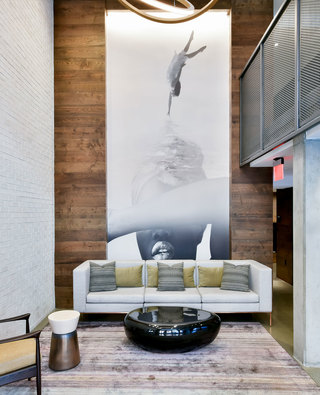
Integrated with the refined industrial materials palette are unique custom works reflecting the people, nature, and vision of Oakland's past, present and future.
Local artist's murals reflect themes of transportation and food production history of the neighborhood. The project tells the story of the past and supports artists who are a defining part of Oakland's story today. Artist David Polka's mural reflecting the interconnection of food production, goods movement, and the natural environment adorns the leasing office's industrial brick wall.
The San Francisco Bay is famous for its tricky navigation and historic shipping navigation maps for access to the Oakland port terminals of Jack London were used as wallpaper in this refined resident lounge.
Oakland-based artist John Felix developed a piece using salvaged materials and themes of nature and connection to enhance a stairwell that also includes a trough of legos and a building platform inviting guests to create interactive artwork themselves.
Historically, rail tracks rain in the sidewalk to facilitate loading canned foods from the prior warehouse onto train cars. In redevelopment, the rail track was retained in the sidewalk and incorporated into a sculptural pattern defining planter areas.

Fourth Street East achieved the Green Point Rated certification due to its location being within walking distance of several public transit options, shops, and entertainment and the reuse of formally industrial land and materials.